
Service robots




Smarter Spaces. Safer Operations. Sustainable Performance.

The future of facility management is defined by intelligent automation. As the industry faces rising operational costs, staff shortages, and increasing expectations for safety and efficiency, service robots have become essential to ensuring smooth, sustainable, and data-driven operations. By bringing together automation, artificial intelligence, and connected technology, these robots help businesses reimagine the way they manage and maintain their facilities.
At MZX Robotics, we see automation not as a replacement for human work, but as an enhancement of it. Our autonomous and semi-autonomous systems handle the repetitive, demanding, and time-sensitive tasks that drain human capacity, allowing staff to focus on creative, high-value activities. The result is a smarter, more agile, and more resilient operation, one that is built on innovation and sustainability.
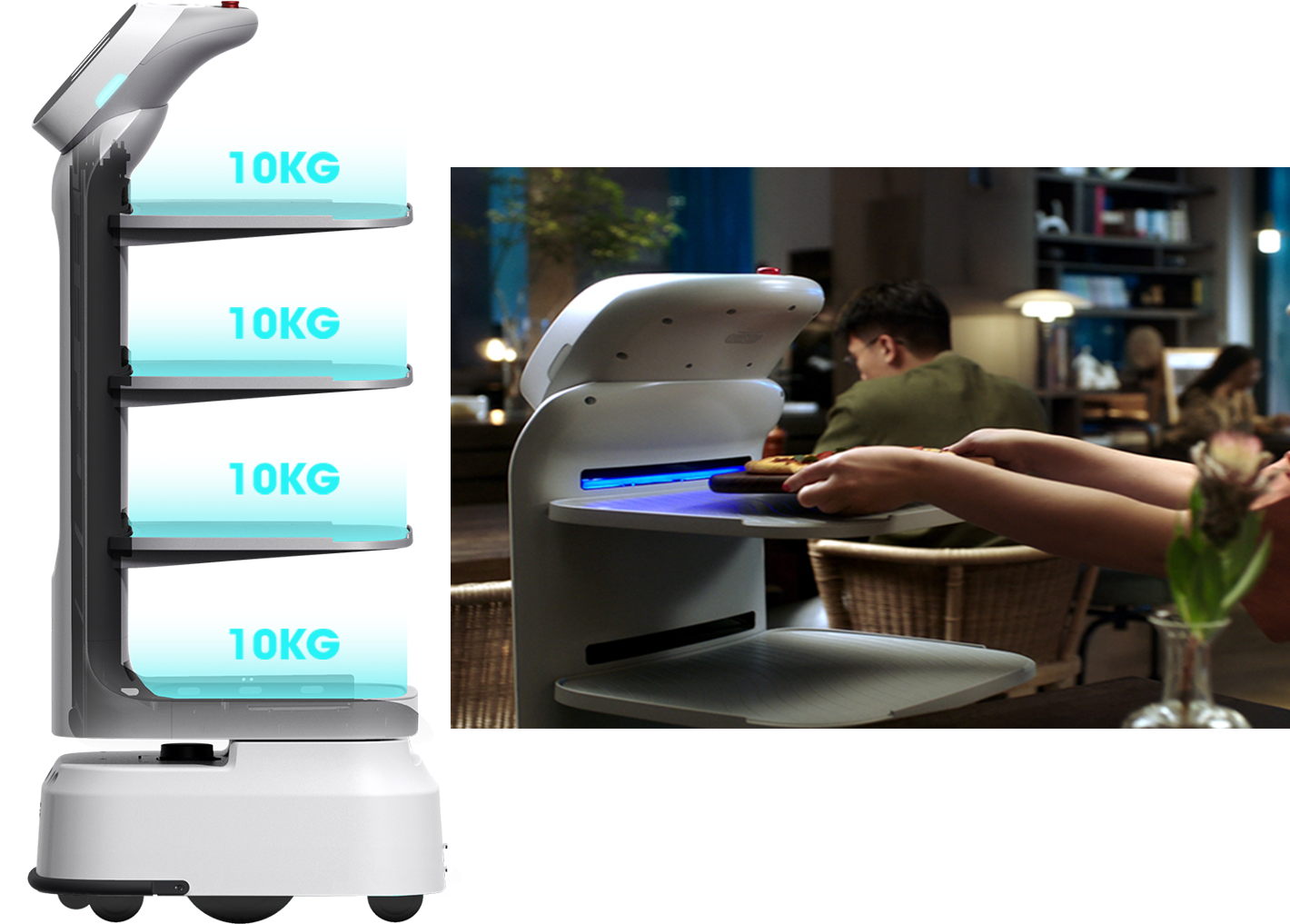

Europe’s aging population is reshaping the workforce. With fewer young professionals entering facility-related sectors such as cleaning, hospitality, and maintenance, the industry is facing a growing labor gap. Service robots offer a sustainable and forward-thinking solution to this demographic shift. By automating critical yet routine tasks, robots ensure reliability and continuity in environments where human labor is becoming increasingly scarce. They enable businesses to maintain service quality, meet rising expectations, and remain competitive in an evolving market.
The Technologies That Power Modern Service Robots
Perception and navigation
At the core of every service robot lies a sophisticated sensory system that allows it to understand and interact with its surroundings. LIDAR (Light Detection and Ranging) scanners, depth cameras, ultrasonic, and infrared sensors continuously map the environment in three dimensions. This sensor fusion enables robots to detect obstacles, recognize surfaces, and navigate safely and efficiently through even the most dynamic public or industrial spaces. Intelligent path-planning algorithms ensure that every movement is optimized for precision, safety, and efficiency.


Artificial Intelligence and Machine Learning
The intelligence of service robots is built upon advanced AI and machine learning algorithms that allow them to analyze complex data, make real-time decisions, and optimize their performance over time. These systems process continuous input from cameras, sensors, and operational feedback, enabling robots to adapt to new environments, refine their navigation, and execute tasks with increasing precision. Through face recognition and pattern detection, robots can identify individuals, recognize returning visitors, and personalize interactions. This capability supports enhanced security, better customer engagement, and seamless integration into human environments.
Connectivity and IoT Integration
Modern facility management is interconnected. With Internet of Things (IoT) integration and cloud-based control platforms, service robots operate as part of a fully connected ecosystem. Managers can oversee entire fleets remotely, monitor performance, track maintenance needs, and access real-time data analytics from any device. Fleet management dashboards provide transparent insight into energy use, uptime, and task efficiency, while predictive maintenance algorithms prevent breakdowns and reduce costs. This connected intelligence transforms facility management from reactive oversight into proactive optimization.


Self-Charging and Continuous Operation
True autonomy extends beyond navigation, it includes energy independence. With auto-charging and self-docking systems, service robots automatically return to their charging stations when battery levels drop. Once recharged, they resume operations without human intervention. This self-sustaining capability guarantees uninterrupted performance 24/7, maximizing uptime and efficiency. High-capacity batteries, intelligent energy distribution, and adaptive power management systems make continuous operation not only possible but effortless.
Natural Multi-Modal Communication
Robotics is most effective when it feels natural. Through natural multi-modal communication, service robots can interact with humans using voice, visual cues, digital expressions, gestures, and screen-based interfaces. This creates intuitive, human-like engagement that requires no special training to understand. Robots can respond to spoken commands, display useful information on integrated screens, or use light signals and animations to express operational status. Combined with face recognition and voice analysis, this communication layer allows robots to recognize and adapt to individual users, creating smoother, more personalized interactions that improve user experience and trust.

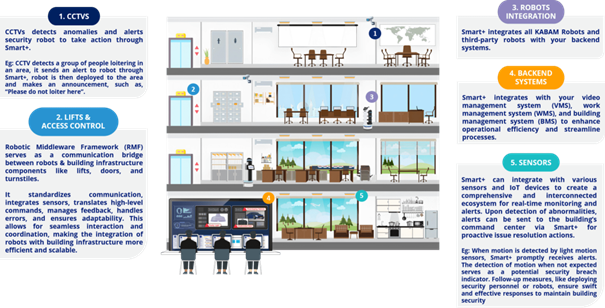
User-friendly interface
Behind every advanced robotic system is an interface designed for simplicity and accessibility. A user-friendly interface ensures that operators can manage, schedule, and control robots with ease — whether through touchscreens, mobile apps, or desktop dashboards. Clear visual layouts, real-time status indicators, and intuitive controls reduce the need for specialized training and allow for quick deployment in any environment. By emphasizing ease of use, this technology bridges the gap between complexity and accessibility, making robotics approachable for all levels of staff. The combination of powerful automation and a human-centered interface design ensures that technology remains an enabler, not a barrier.
Video Analytics (security and facility management)
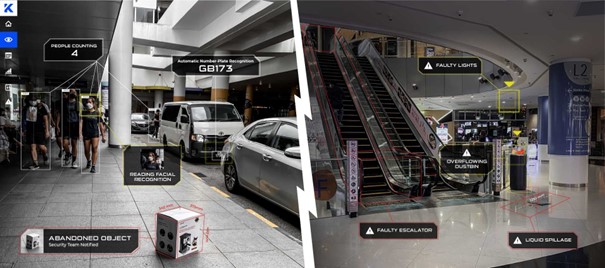
Modern service robots play a vital role in ensuring safety and operational transparency through AI-powered video analytics. Integrated high-definition cameras and edge computing allow robots to perform real-time security monitoring, detect irregularities, and identify safety risks such as unauthorized access, equipment failure, or hazardous conditions. In facility inspection, video analytics enables precise detection of faults, from malfunctioning lights and open doors to waste overflow and blocked exits. The combination of AI vision analysis and automated reporting ensures rapid response, reduced human error, and improved overall safety standards. This intelligent visual oversight transforms robots into proactive sentinels that enhance both security and facility efficiency.

Data Analysis and Predictive Intelligence
Every robotic action generates valuable data. Modern service robots collect and analyze thousands of data points, from movement patterns and surface coverage to environmental metrics and interaction feedback. Using AI-driven data analysis, facility managers can gain deep operational insights, optimize workflows, and make informed decisions. Predictive intelligence further enhances efficiency by identifying trends, forecasting maintenance needs, and preventing downtime before it occurs. Data is not just recorded, it is transformed into actionable intelligence that continuously improves operations.
The Impact of Automation
Integrating robotics into facility management delivers measurable, long-term value. Automation can reduce operational costs by up to 25%, improve consistency, and significantly reduce workplace risks. Robots perform tirelessly and predictably, maintaining quality standards that manual operations often cannot sustain. The flexibility of Robotics-as-a-Service (RaaS) enables companies to integrate robotic solutions without large upfront investment, scaling technology in alignment with business growth and evolving needs.


Safety and Human Collaboration
Safety is a cornerstone of robotic design. Service robots are equipped with collision-avoidance systems, redund safety sensors, and emergency-stop mechanisms that comply with the strictest European safety standards. Their operation prioritizes human coexistence, ensuring that automation complements rather than replaces human expertise. By fostering safe collaboration between people and machines, service robots enable more efficient, reliable, and harmonious workplaces.
As the demand for smarter, cleaner, and safer facilities continues to rise, service robots in facility management have moved from futuristic innovation to everyday necessity. By combining artificial intelligence, connectivity, self-sustaining operation, and human-centered communication, robotics is creating a new standard of efficiency, reliability, and trust.
At MZX Robotics, our mission is to empower businesses through intelligent automation that supports people rather than replaces them. We believe science is not fiction, it is progress in motion. Through cutting-edge robotics, we are building the foundation for a cleaner, safer, and more sustainable world where people and technology work together in perfect harmony.


