
Industrial robotics




The Intelligent Foundation of Modern Automation
Industrial robotics has evolved from a niche field of heavy machinery into one of the most dynamic areas of technological innovation. Combining precision engineering, sensing technologies, artificial intelligence, and advanced control systems, modern robots redefine what is possible in manufacturing and logistics.
At the heart of this revolution stands a new generation of robots—lightweight, intelligent, and collaborative—capable of operating safely alongside humans while delivering industrial-grade performance. The technologies developed by Dobot illustrate this transformation vividly, offering automation solutions that are accessible, flexible, and deeply integrated with the principles of Industry 4.0.
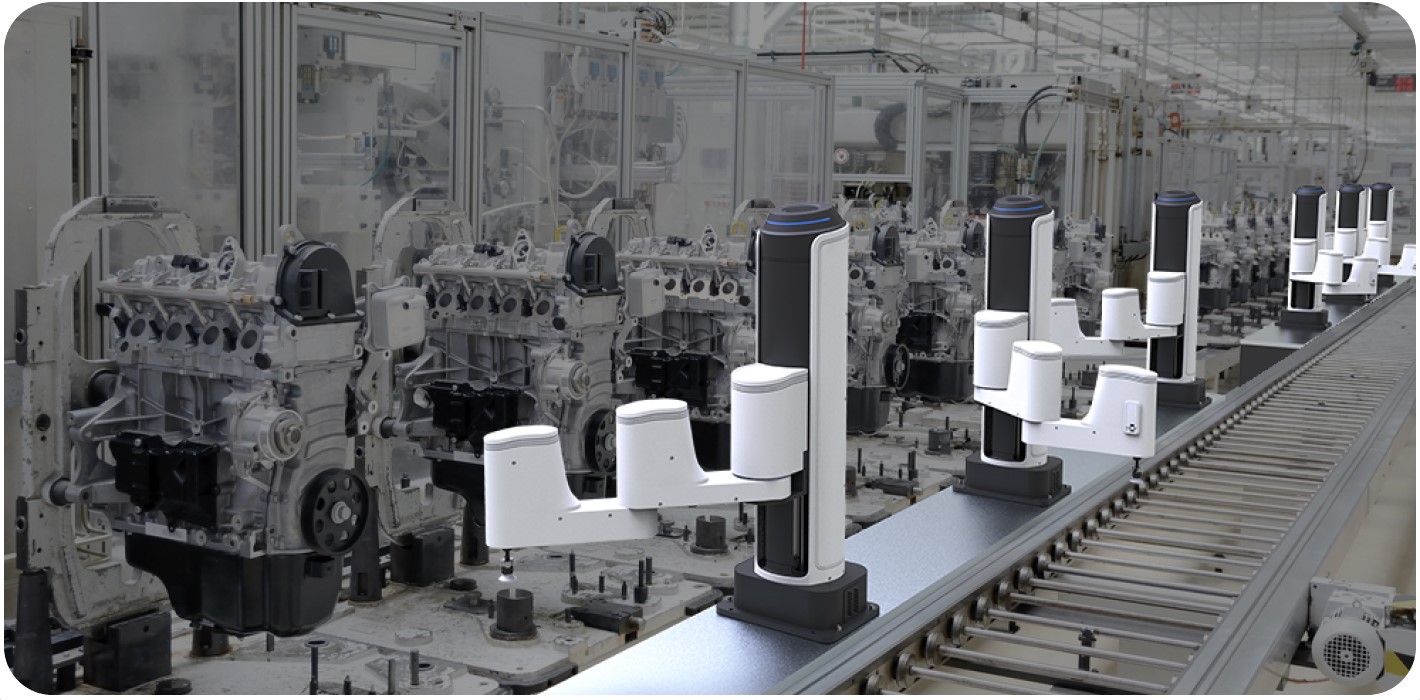
From Traditional Automation to Collaborative Intelligence
For decades, industrial robots were large, fixed systems operating in isolation, programmed to repeat the same movements continuously behind safety cages. They were highly efficient but rigid, designed for mass production rather than adaptability.
The emergence of collaborative robots (cobots) marked a decisive shift in this paradigm. Cobots are designed to share workspaces with humans safely, adapting their behavior dynamically through force sensing, proximity detection, and real-time feedback. This new class of robots bridges the gap between human dexterity and robotic precision, enabling automation even in small or medium-sized production environments.
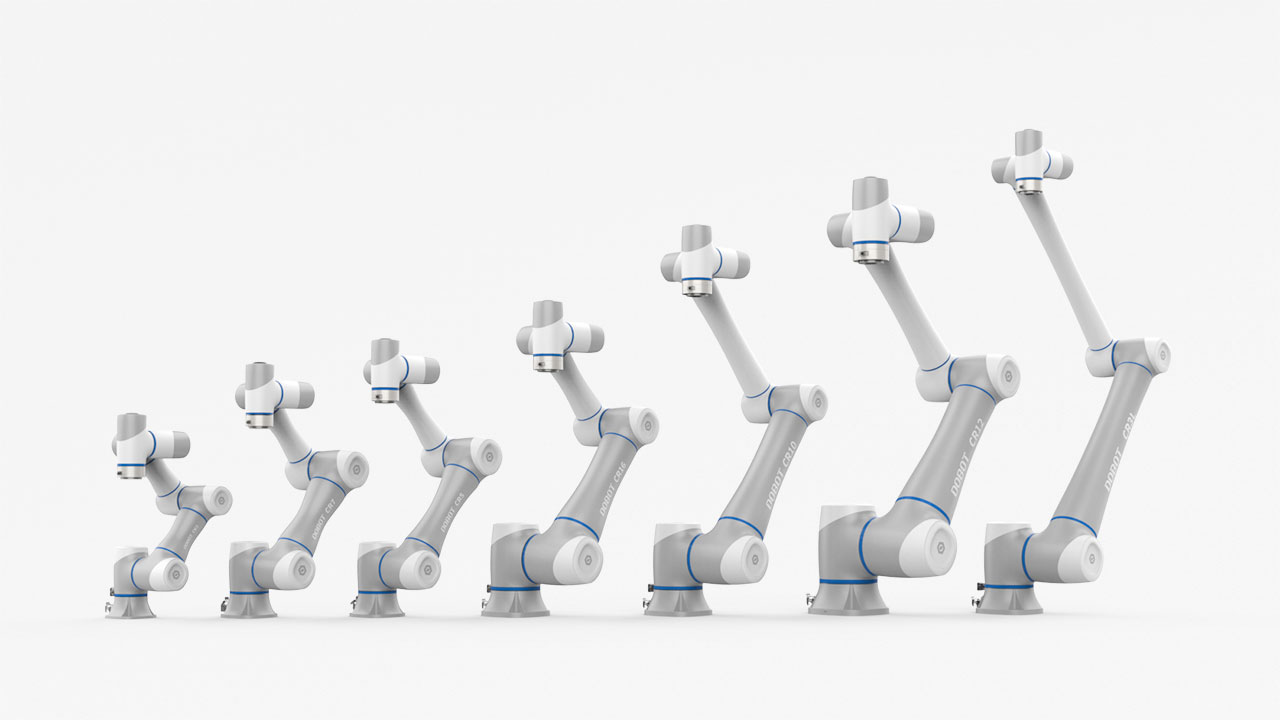
Dobot’s approach to industrial robotics epitomizes this evolution. The company focuses on creating compact, flexible systems that integrate seamlessly into existing workflows, allowing companies to automate without redesigning their entire production line. Their range of collaborative arms covers multiple payloads—from lightweight manipulators suited for delicate assembly tasks to powerful arms capable of palletizing and machine tending.
The Core of Dobot’s Robotic Design Philosophy
Dobot’s design philosophy revolves around three central principles: safety, intelligence, and accessibility. Every robot is conceived as part of a larger ecosystem—one that unites sensing, motion, and control into a coherent, user-friendly whole.
Each robotic arm features high-precision servo motors and advanced motion controllers that ensure smooth, accurate movement across multiple axes. The structure combines lightweight alloys and harmonic drives for rigidity and repeatability, allowing sub-millimeter accuracy even during dynamic motion. These capabilities are complemented by advanced software that enables trajectory optimization and adaptive control, ensuring consistent quality across high-speed production cycles.
SafeSkin – Proactive Human–Robot Safety
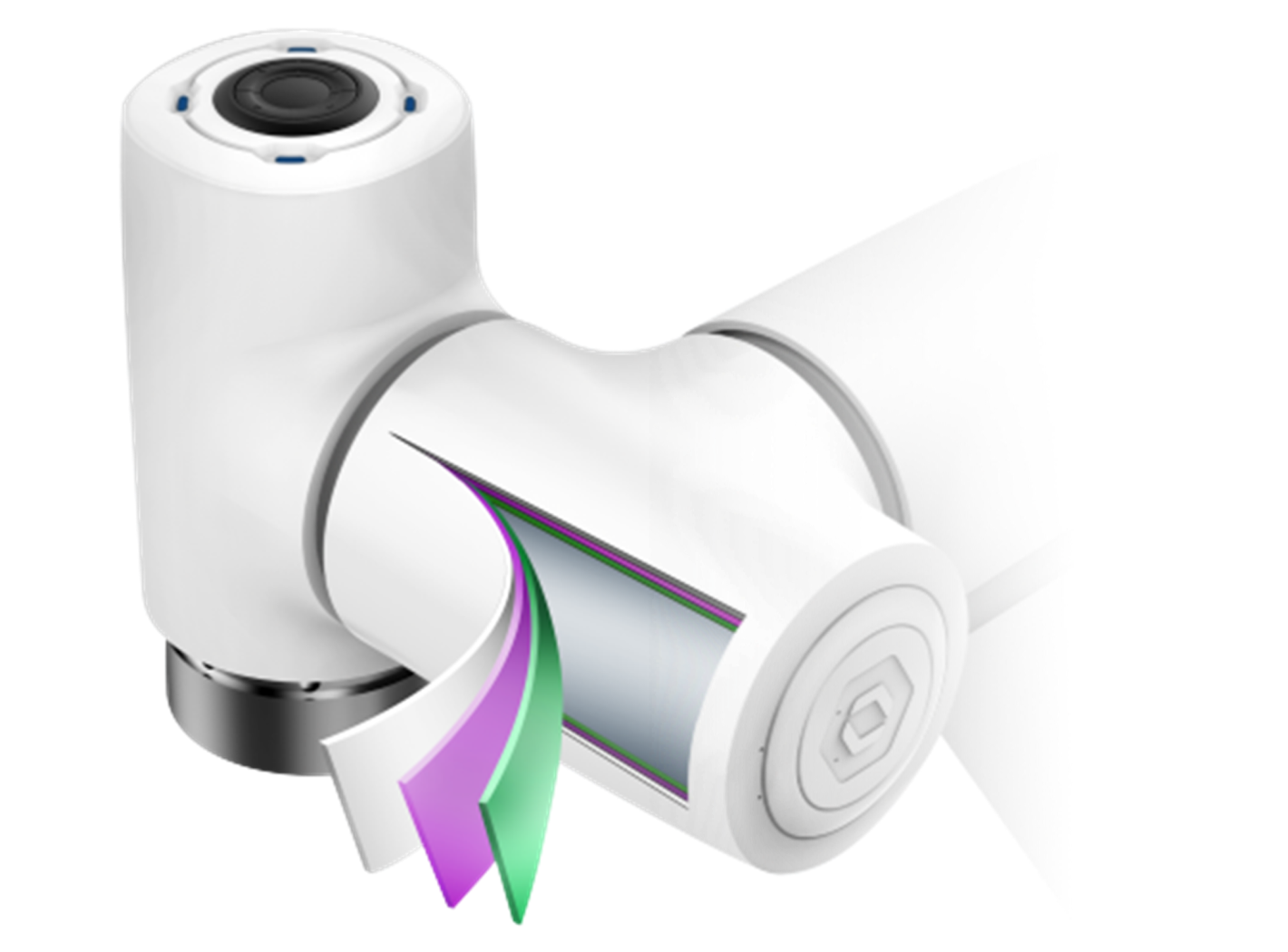
One of Dobot’s most significant innovations is SafeSkin, an intelligent pre-collision sensing technology that fundamentally changes how humans and robots interact.
Unlike traditional systems that react only after physical contact occurs, SafeSkin works proactively. It uses proximity detection sensors embedded along the robot’s surface to sense approaching objects or humans. When a person’s hand or body enters the robot’s safety field, SafeSkin sends a signal to the controller, instantly slowing down or pausing motion before any collision happens.
When the robot operates alone, it can move at full industrial speed.
When a human approaches, it automatically switches to collaborative mode, reducing speed and force.
Once the area is clear, it seamlessly resumes normal operation.
This intelligent safety mechanism allows robots to work fluidly alongside people, minimizing downtime and eliminating the need for fixed barriers or cages. In practice, it means production cells can be smaller, more flexible, and easier to reconfigure.
Advanced Gripping and End-Effector Ecosystem
A robot’s true versatility lies in its end effector—the tool that connects the robot to its task. Dobot has developed a comprehensive ecosystem of grippers and end-effectors to expand application possibilities across industries.
Mechanical and Adaptive Grippers
Mechanical two- and three-finger grippers provide reliable grasping for rigid components. Their force can be adjusted electronically, allowing secure handling of delicate or heavy objects. Some models integrate force sensors that detect whether an object has been properly gripped, ensuring quality control during automated assembly.

Vacuum and Soft Grippers
For irregular or fragile items—such as glass, packaging, or food products—vacuum grippers and soft elastomer-based grippers allow safe handling without damaging the material. Their adaptive surfaces mold gently around objects, ensuring stability even when shapes vary.

All of these end-effectors connect through plug-and-play interfaces, meaning they can be swapped in minutes without reconfiguring the system. This modularity enables a single robot to perform multiple tasks throughout the day, maximizing uptime and return on investment.
Vision and AI integration
Modern robotics increasingly relies on vision and artificial intelligence to achieve adaptability. Dobot’s robots integrate 2D and 3D vision systems that allow them to perceive and understand their environment.
These vision modules use cameras, structured light, and AI-based image processing to:
Recognize parts in random orientations (bin-picking)
Align components precisely during assembly
Inspect finished products for defects or irregularities
Read barcodes, QR codes, and product labels
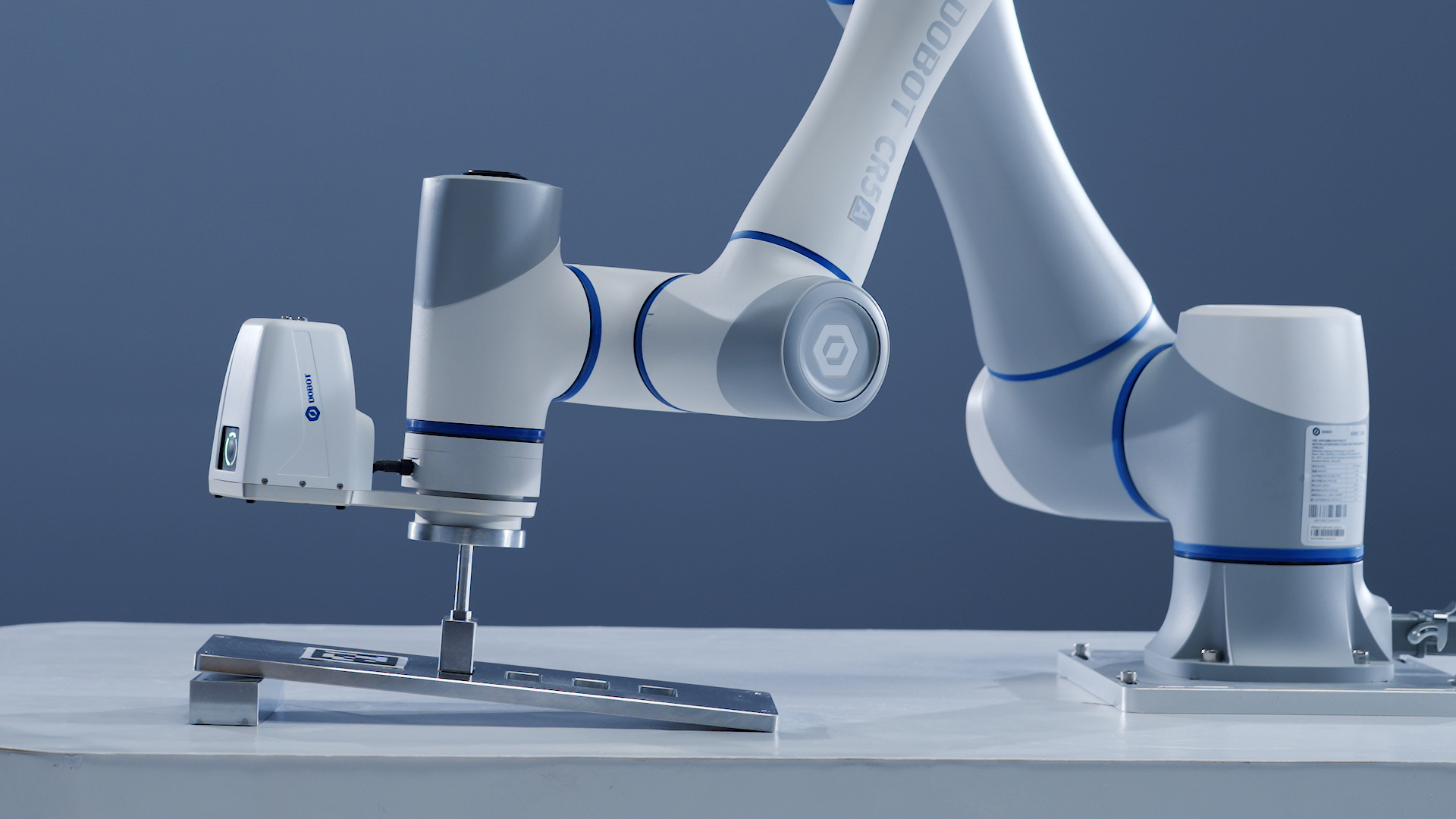
Combined with AI algorithms, these systems allow the robot to make decisions in real time—adjusting its trajectory, choosing the correct tool, or even determining whether an operation has succeeded. Vision integration transforms robots from pre-programmed machines into autonomous, context-aware systems capable of operating in dynamic production environments.
Autonomous Mobile Manipulator Robots (AMMR): The Next Step in Flexibility
As factories become more dynamic, the need for mobile, reconfigurable automation grows. Dobot addresses this challenge with Autonomous Mobile Manipulator Robots (AMMRs) — mobile platforms equipped with collaborative robotic arms.
An AMMR combines the mobility of an autonomous mobile robot (AMR) with the dexterity of a cobot. It can navigate the factory floor autonomously, transport materials between workstations, and perform tasks such as loading machines, packaging, or assembly directly at the point of need. Using lidar scanners, visual SLAM (Simultaneous Localization and Mapping), and intelligent path-planning algorithms, these robots move safely among humans and other equipment. They dynamically coordinate with production schedules, docking automatically to charging stations or work cells.


